THE UAP MAP
RB-47H electronic reconnaissance flight · 17 July 1957

Three strands.
One unresolved
correlation.

Six U.S. Air Force crew. Airborne electronic bearings. A reported light. Ground-radar involvement. The surviving record is serious—but it does not preserve the raw data needed to turn every observation into one proven track.

Gulf Coast → Texas / Oklahoma6 crewECM / visual / radar1957
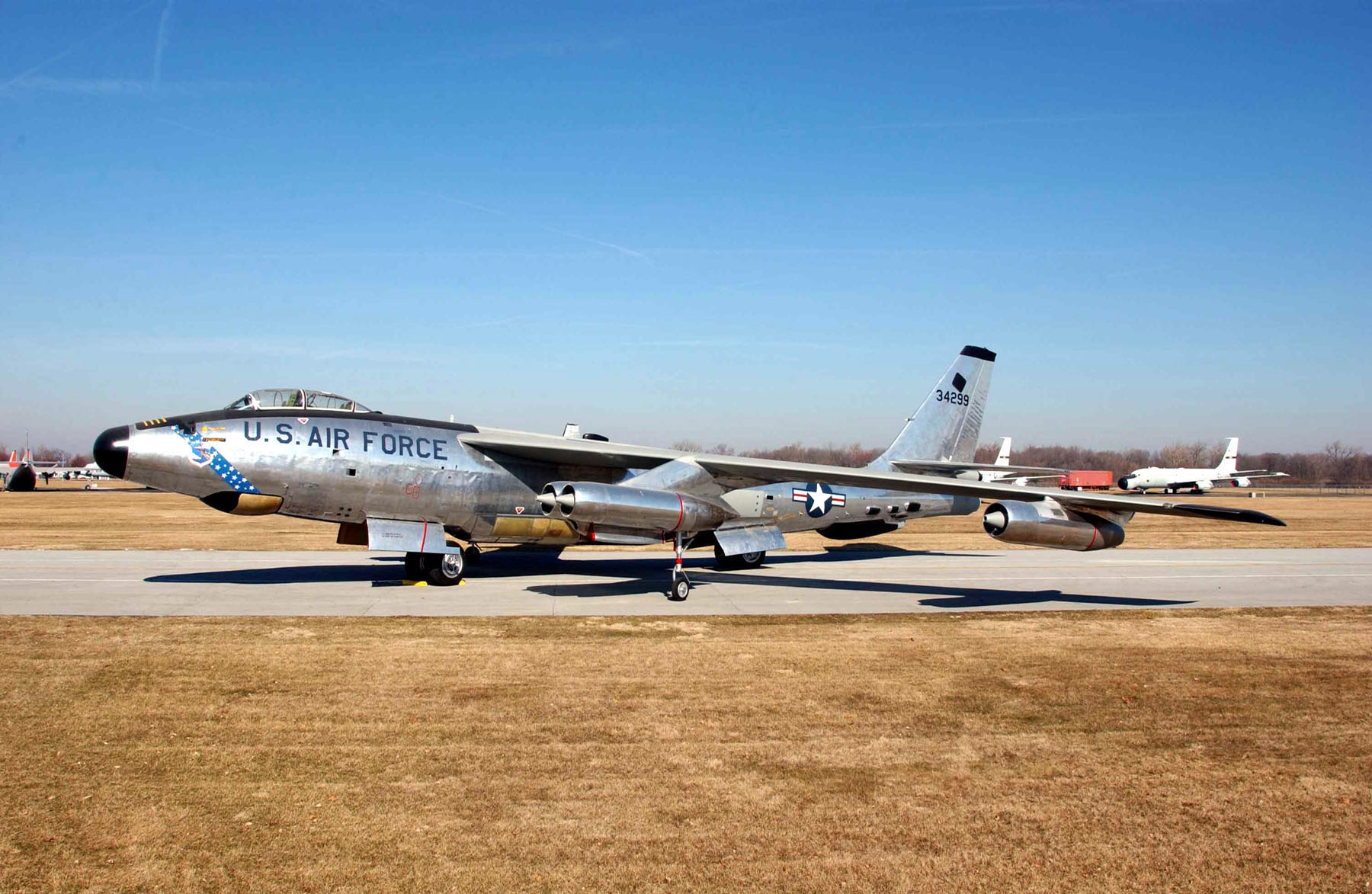
U.S. Air Force RB-47H aircraft on display
AIRCRAFT CONTEXT, NOT INCIDENT PHOTOGRAPH. RB-47H-1-BW 53-4299 after retirement; U.S. Air Force photograph, public domain. The photograph depicts the aircraft type, not the 17 July 1957 flight.
READ THIS CASE CORRECTLY: the page separates what crew members reported, what later documentation describes, what technical reconstructions infer, and what the public record cannot now test.
01 / the record

Not one sensor.
Not one clean track.

The RB-47 case is often reduced to a slogan: “the sensors agreed.” The more accurate version is stronger and more careful. Several observation systems were reported during one flight, but the publicly available record does not preserve a continuous raw dataset that can prove each observation came from one physical target.

Strand A / airborne electronic detection

Electronic bearings

Electronic-warfare personnel reported radar-like emissions at changing bearings. Those reports form a core part of the later technical reconstruction, but the original raw recordings are not publicly available for modern re-analysis.
Strand B / cockpit observation

An intense light

Cockpit crew reported a bright light during portions of the sequence. A visual observation can be real without, by itself, establishing range, speed, identity or a link to every electronic indication.

Strand C / ground radar

Reported radar support

Ground-control radar became part of the reported sequence over Texas. The surviving public account does not provide a complete original plot set or a continuous independently reconstructable track.

The case is important because the strands were reported in proximity during one flight. Its limit is equally important: proximity is not the same thing as a fully preserved correlation.
02 / reported sequence

What happened in order—without drawing a perfect path that the record cannot support.

PRE-DAWN · 17 JUL 1957

Reconnaissance flight

An RB-47H carrying electronic reconnaissance equipment travels along the Gulf Coast and toward Texas.

REPORTED CONTACT

Electronic indication

An operator reports a radar-like signal from an unusual bearing. This is a reported electronic observation, not a surviving raw recording.

REPORTED CONTACT

Visual light

Cockpit personnel report an intense light. The report adds a visual strand but does not itself settle its distance or identity.

REPORTED CONTACT

Ground radar joins

Ground-control radar is reported to have become involved during the Texas portion of the flight.

POST-FLIGHT

Debrief and paperwork

The crew is debriefed and the case enters the U.S. Air Force investigative record.

LATER ANALYSIS

Commercial-aircraft proposal

Project Blue Book offered a conventional-aircraft explanation for the sequence. That proposal must be judged against every reported strand, not only one.

LATER ANALYSIS

Technical reconstruction

James E. McDonald later reconstructed the case from surviving documentation and interviews, stressing the relationship among the reported strands.

THE PRESENT LIMIT

Raw correlation missing

No complete public archive of the original electronic recordings and radar plots allows a modern, end-to-end reconstruction.

03 / correlation

The evidence is layered.
So are the limits.

A durable account has to distinguish a contemporaneous observation from a later interpretation. The matrix below is deliberately conservative. It shows why the case remains useful without claiming a technical certainty the surviving record cannot provide.

Evidence strand
What the record supports
What it cannot settle alone
Airborne electronic reports
Crew testimony and later technical discussion describe electronic bearings during the flight.
Whether each reported bearing came from one object, one emitter, propagation effects or another source.
Visual report
Cockpit personnel reported an intense light during the sequence.
Exact range, size, speed, identity or whether the light corresponds to every electronic/radar report.
Ground-radar involvement
Later accounts and technical discussion describe reported ground-radar participation.
A complete plotted track, exact target identity and a modern independent correlation with the other strands.
Blue Book explanation
A conventional commercial-aircraft explanation was proposed in the Air Force investigative process.
That the proposal resolves every reported electronic, visual and radar element without residual problems.

What a strong reading says

Trained military personnel reported multiple observation types during one flight, and the sequence was documented closely enough to sustain later technical examination.

What a strong reading does not say

The public record proves that all indications were one craft, continuously tracked by mutually confirming sensors, or explained by no conventional mechanism.

04 / context and limits

The aircraft is real.
The event image is not.

There is no authenticated photograph of the reported 1957 object. The only images used here are public-domain U.S. Air Force photographs of RB-47H aircraft, visibly labelled as historical context.

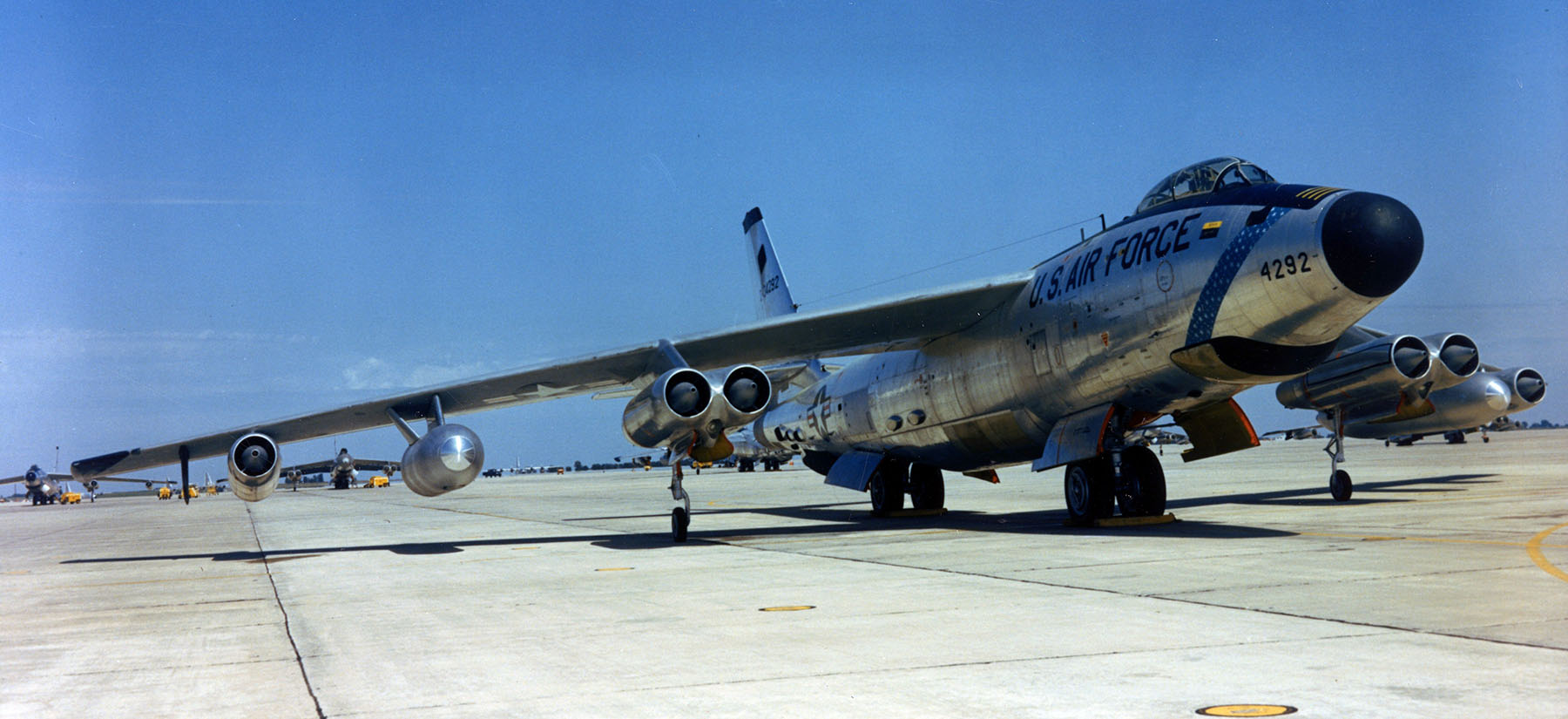
RB-47H Stratojets in a U.S. Air Force photograph from circa 1965
TYPE CONTEXT, NOT INCIDENT PHOTOGRAPH. RB-47H Stratojets, circa 1965; U.S. Air Force photograph, public domain. This later image is included only to identify the aircraft type and its reconnaissance context.

The RB-47H was built for electronic reconnaissance. That context makes the crew’s reported electronic observations important, but it does not by itself validate any interpretation of them.

The absence of an object photograph should not be papered over with a generated spacecraft or an invented radar display. The visual centre of the case is the documentary record: aircraft, reports, later reconstructions and the gaps between them.

Editorial rule: no synthetic craft image, no fabricated raw radar plot, no reconstructed object track presented as evidence.